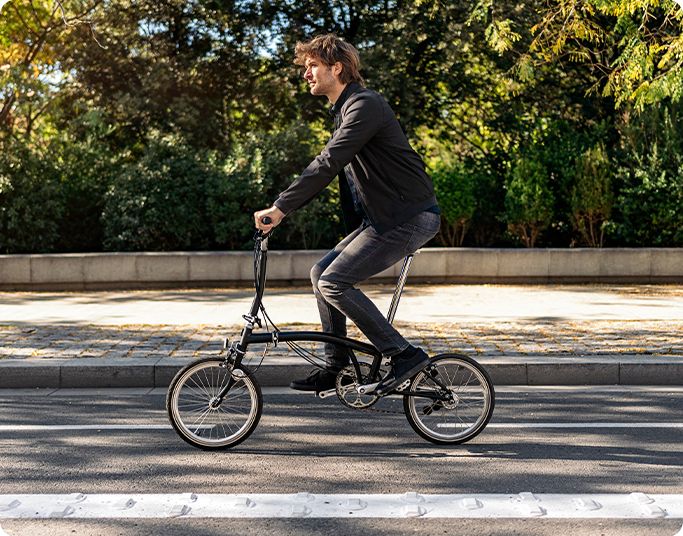

The Future of Folding E-Bikes: Beyond the Fold
How Design, Riding Comfort, and Innovation Are Shaping the Next Generation of Premium Folding E-Bikes
For years, folding bicycles have been designed around one fundamental advantage: portability.
The ability to fold a bicycle into a compact size has made folding bikes a practical solution for urban commuters, travelers, and people with limited storage space.
But as the electric bicycle market continues to evolve, consumer expectations are changing.
Today, a folding e-bike is not just a bicycle that folds. It is also a personal mobility product, a lifestyle choice, and an expression of design.
At MORFUNS, we believe the next generation of premium folding e-bikes will be shaped by a broader question:
How can a folding e-bike combine the convenience of compact mobility with the design, comfort, and riding experience of a premium bicycle?
1. Beyond Traditional Folding Bike Design
Traditional folding bike designs have often prioritized the folding mechanism and compact dimensions.
These remain important considerations. However, as more consumers explore electric folding bikes for everyday transportation, appearance and product identity are also becoming relevant to how brands differentiate their offerings.
A folding e-bike should not have to compromise its visual appeal simply because it needs to fold.
Clean frame lines, carefully integrated components, concealed cable routing, and thoughtfully designed folding mechanisms can all contribute to a more refined appearance.
For bicycle brands, distinctive design can also provide an opportunity to establish a recognizable identity in an increasingly competitive market.
MORFUNS EOLE explores this design direction through its aerodynamic carbon-fiber frame, integrated folding hinge, and contemporary styling.
The objective is to bring together the practicality of a folding bicycle and the aesthetics of a modern premium e-bike.
2. Lightweight Materials and Everyday Portability
Weight remains an important consideration for folding e-bike users.
For commuters who carry their bicycles onto public transportation, lift them into a car, or store them in apartments, a lighter bicycle can make everyday handling more convenient.
Carbon fiber offers opportunities to develop lightweight frame structures while allowing designers to explore different shapes and forms.
However, lightweight engineering involves more than simply reducing the weight of individual components.
Frame stiffness, structural strength, durability, rider comfort, and the reliability of the folding mechanism must all be considered together.
For manufacturers, the challenge is to find the right balance between weight, performance, safety, and practical usability.
At MORFUNS, material selection and structural design are important parts of our product development process, particularly for premium folding e-bike concepts.
3. Riding Comfort and Stability Matter Beyond Folding
A compact folding size is valuable, but it is only one part of the riding experience.
For everyday users, a folding e-bike must also provide predictable handling, comfortable riding geometry, and confidence during regular urban journeys.
This creates an important engineering challenge.
How can a bicycle achieve convenient folding dimensions while maintaining the frame stiffness, stability, and riding comfort expected from a premium bicycle?
The answer involves the combined design of the frame, folding joints, wheel size, geometry, suspension where applicable, and component configuration.
Rather than optimizing a folding e-bike around a single specification, manufacturers need to consider how the entire bicycle performs as a system.
For brands developing their own product lines, these engineering decisions also create opportunities to differentiate products for different customer groups and market segments.
4. Component Integration and Customization
Another important development area is the integration of motors, drivetrains, and other components.
Hub motors, mid-drive systems, belt drives, and conventional chain drivetrains each offer different characteristics in terms of packaging, maintenance, riding feel, cost, and application.
For example, belt drive systems may appeal to users looking for a cleaner drivetrain and reduced routine maintenance. Different motor configurations can also influence frame design, weight distribution, and the overall riding experience.
There is no single configuration that fits every market or application.
The right combination depends on the intended customer, local regulations, price positioning, service requirements, and the performance expectations of the brand.
This is where product development and manufacturing experience become particularly important.
By considering component integration during the early design stage, brands and manufacturers can work toward a more cohesive product rather than treating each component as an isolated selection.
5. What Does This Mean for Bicycle Brands and Distributors?
As the folding e-bike category develops, brands and distributors face several questions when planning their next product generation:
- How can a folding e-bike stand out visually in a crowded market?
- Which customers prioritize low weight, compact folding, or riding comfort?
- What component configurations best fit the target market and price segment?
- How can product design, engineering, and manufacturing work together to create a distinctive product?
These questions are particularly relevant for brands considering new product launches, private-label products, or OEM and ODM development projects.
A successful product concept needs to connect market positioning with practical engineering and reliable manufacturing.
At MORFUNS, we work across product design, frame development, component integration, and bicycle manufacturing to support the development of folding e-bikes for different markets and customer requirements.
Our focus is not simply on making a bicycle fold.
It is on developing folding e-bikes that bring together thoughtful design, practical functionality, and an enjoyable riding experience.
Looking Ahead: What Should the Next Folding E-Bike Deliver?
The future of folding e-bikes will likely involve different approaches for different users and markets.
Some customers may prioritize the smallest possible folded dimensions. Others may value lightweight construction, premium aesthetics, riding comfort, or low-maintenance components.
For bicycle brands and distributors, understanding these priorities is an important part of developing products that meet real market needs.
At MORFUNS, we welcome conversations with brands, distributors, and industry professionals who are exploring the next generation of folding electric bicycles.
What do you think matters most in a premium folding e-bike: distinctive design, lightweight construction, riding comfort, compact folding, or component integration?
We would love to hear your perspective.
MORFUNS Technology (Changzhou) Co., Ltd.
Electric Folding Bike Manufacturer | OEM & ODM