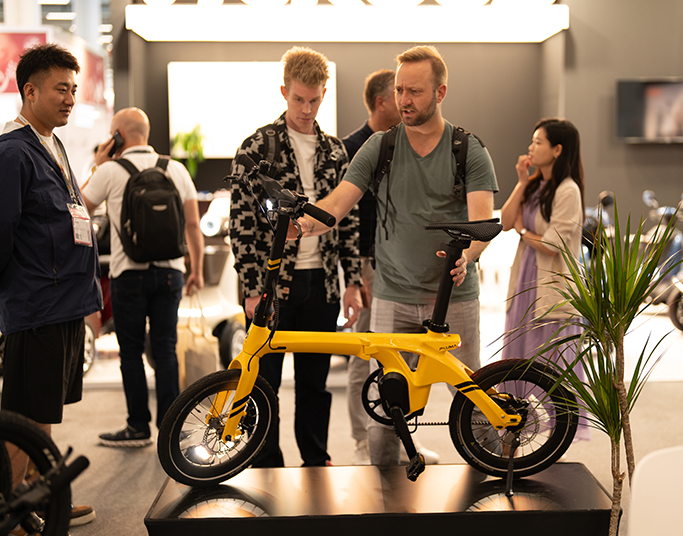

The most useful folding e-bike is not the one with the longest list of features. It is the one that makes the awkward parts of a city journey easier: the stairs at home, the crowded lift, the last few metres to the office and the corner where the bike has to live overnight.
That is why choosing a folding e-bike starts with your routine rather than with a motor number. How often will you carry it? Where will you charge it? What kind of road will it cross on the way to work? A bike that is excellent on a smooth cycle path can feel completely wrong if your commute includes broken paving, a steep ramp or a train platform.
Morfuns is a useful example because its city folding range covers several different answers to the same problem. The PLUMA family focuses on compact 18-inch bikes and low weight. The EOLE family includes 20-inch models, aluminium and carbon-fibre construction, mid-drive and hub-motor configurations, and versions with more suspension equipment. The right comparison is therefore about trade-offs, not about finding one universally best model.
Start with the part of the journey you actually have to carry
Write down every point where the bike leaves the road. It might be a flight of stairs, a narrow hallway, a bus, a train carriage or the walk from a secure cycle room to a desk. These short sections often decide whether a folding bike becomes part of your daily routine or remains an occasional purchase.
Look at the complete ready-to-ride weight, including the battery and any rack or mudguard you intend to use. Morfuns lists the EOLE PRO at 23 kg, the EOLE XM at 19 kg and the EOLE S at 14.8 kg. Those figures describe very different carrying experiences even before you consider wheel size or folded dimensions. The PLUMA listings range from 13.2 kg for the PLUMA ULTRA to heavier magnesium and equipment-focused versions.
Weight is only one part of portability. A balanced folded package can be easier to lift than a lighter bike with an awkward grip. Before ordering, check the folded width, the position of the hinge, whether the wheels roll while folded and whether the battery can be removed for charging. A product photograph cannot answer all of those questions, so ask for the folded dimensions and a short folding demonstration for the exact version you are buying.
Choose wheel size around your roads and storage space
An 18-inch wheel can keep a folding bike compact and quick to turn in tight streets. A 20-inch wheel generally gives the bike a little more stability over rough surfaces and makes the riding position feel closer to a conventional city bike. Neither size is automatically more comfortable. Tyre width, tyre pressure, frame geometry, saddle height and suspension all change the result.
Morfuns places these options in separate families. The PLUMA range is built around 18-inch folding e-bikes, while the EOLE range uses 20-inch wheels. The EOLE PRO, for example, is listed with 20 x 2.4-inch puncture-resistant tyres, while the lighter EOLE S uses 20 x 1.75-inch tyres. That difference says more about the intended ride than the wheel diameter alone: the PRO is prepared for rougher urban routes, while the S puts more emphasis on low weight and easy carrying.
Take a short test ride over the surface you use most often. If the front wheel feels nervous over drain covers or broken asphalt, a larger or wider tyre may help. If your main problem is a narrow storage cupboard, the smaller folded package may matter more than a small gain in comfort.
Match motor behaviour to the route
Motor wattage is easy to compare and easy to misunderstand. A commuter usually notices how smoothly assistance starts, how the bike behaves at low speed and how naturally the motor works with the gears. A high peak number does not tell you whether the bike will feel calm in stop-and-go traffic.
The Morfuns range shows why the motor type belongs in the comparison. The EOLE PRO page lists a 36V 350W rear motor, five assist levels and a torque sensor. The EOLE XM uses a 250W mid-drive motor and a torque sensor. A mid-drive system can make the rider's pedalling feel more directly connected to the assistance, especially when the route changes gradient, while a rear hub motor can be a straightforward choice for a familiar city setup. The best option depends on the local specification and the way you ride.
Motor ratings, assisted-speed limits and equipment requirements vary by country. Confirm the configuration sold in your market and check local e-bike rules before using a specification from an international product page in a purchase decision.
Treat battery range as a planning number
Published range is useful for comparing designs, but it is not a fixed distance that every rider will achieve. Rider weight, hills, wind, temperature, tyre pressure, stop-start traffic and assist level all affect energy use. A range test in ECO mode on flat roads is a reference condition, not a promise for a winter commute with several climbs.
Ask three practical questions:
- What is the normal round-trip distance, including detours?
- Can the battery be removed and charged where the bike is stored?
- Is a spare battery or a higher-capacity option available for the exact model?
The EOLE PRO page lists a 36V 10Ah seatpost battery with a 15Ah option and an advertised range of up to 115 km. The EOLE XM page lists 7.8Ah, 10Ah and 15Ah options, while the EOLE S lists a removable 7Ah seatpost battery. The PLUMA ULTRA page describes a removable 7Ah seatpost battery and a 60 km range tested in ECO mode on flat roads. These are helpful reference points, but they are not directly interchangeable because the test conditions and component packages differ.
Leave a margin for battery ageing and bad weather. If you need to charge indoors, a removable battery may improve your routine more than a larger fixed battery would.
Put braking and contact points ahead of display features
The useful equipment is the equipment you can control without thinking. Brake lever reach, tyre grip, saddle position and handlebar height matter every day. A bright display is pleasant; predictable braking is essential.
Morfuns lists oil-hydraulic disc brakes on the EOLE PRO, EOLE XM and EOLE S, while the PLUMA ULTRA page lists Tektro hydraulic disc brakes. Hydraulic brakes can offer strong stopping control with modest hand effort, but they still need inspection and service. Ask which pads and rotors are available in your market and whether a local shop can work on the system.
Check the contact points during a test ride. You should be able to reach the brake levers without changing your grip, keep your shoulders relaxed and look behind you without the bike wandering. These details are more valuable to a daily commuter than an extra riding mode that you rarely use.
Decide whether suspension earns its weight
Suspension makes sense when your route contains repeated bumps, rough shoulders or uneven paths. It adds weight and moving parts, so it should solve a real problem rather than simply make the specification sheet look richer.
The EOLE PRO is the equipment-heavy example in the Morfuns range: its page highlights full suspension, hydraulic disc brakes and a 23 kg aluminium-alloy bike. That combination suits a rider who values comfort and control over stairs and a rough commute. A lighter model such as the EOLE S may be easier to carry and store, but it asks more of the tyres, saddle and road surface to provide comfort.
Use the roughest section of your normal journey as the test. If a few metres of bad paving are the only problem, wider tyres and correct pressure may be enough. If most of the route is broken or hilly, the additional suspension can be worth carrying.
Compare the drivetrain with your maintenance options
A commuter bike is a service decision as much as a riding decision. Check where you can buy brake pads, tyres, chains, chargers and batteries. A technically interesting component is less useful if a small replacement leaves the bike unused for weeks.
The current Morfuns pages show both familiar and more specialised approaches. EOLE PRO uses a chain drive with a Shimano seven-speed drivetrain. EOLE XM uses an eight-speed Shimano Altus setup. EOLE S uses a Shimano Altus eight-speed drivetrain. PLUMA ULTRA is described with a 250W mid-drive, torque sensing and a Gates belt-drive system. A belt can reduce routine cleaning and lubrication, while a chain may be easier for a general bicycle shop to service. Neither is automatically better; the local parts and service situation should decide.
Use the Morfuns range as a comparison, not a ranking
The following profiles help narrow the search:
| Commuter priority | A model direction to investigate | Why it may fit | What to verify |
|---|---|---|---|
| Lowest practical carry weight | PLUMA ULTRA or EOLE S | Carbon-fibre construction and published weights of 13.2 kg and 14.8 kg | Folded size, actual accessory weight, local stock and battery details |
| Rough roads and a heavier daily ride | EOLE PRO | Full suspension, 20-inch wheels, hydraulic brakes and larger battery options | Exact motor rating, battery choice, total carried weight and local legal configuration |
| Natural assistance on mixed gradients | EOLE XM or PLUMA ULTRA | Mid-drive motor and torque-sensing systems | Service support, gear range, charger and replacement battery availability |
| Compact storage with a simple routine | PLUMA family | 18-inch folding format and low-weight variants | Hinge operation, folded width and the equipment included in the quoted version |
This is a starting point rather than a verdict. Product names can cover different regional packages, and the website may update specifications as a model changes. Request the current specification sheet before placing an order.
A five-minute buying check
Before you compare prices, answer these questions:
- Can I lift the complete bike up my stairs without avoiding the task?
- Does the folded shape fit my storage space and public-transport routine?
- Is the battery removable, and can I charge it where I keep the bike?
- Does the motor and sensor behaviour suit my hills and traffic?
- Are the brakes, tyres and contact points comfortable on my actual route?
- Can a nearby shop source the wear parts and service the electrical system?
- Does the quoted bike match the current local specification, warranty and delivery terms?
If the answer to one of these is unclear, that is the next question to send to the seller. It is more useful than comparing another marketing adjective.
Final thoughts
A folding e-bike earns its place in city life by reducing friction. It should be easy enough to carry, compact enough to store, stable enough for the roads you use and supported well enough to keep riding after the first service interval.
Morfuns offers several ways to balance those needs. The PLUMA family makes a strong case for low weight and compact 18-inch storage. The EOLE family gives more room to choose between comfort, wheel size, motor layout and battery capacity. Start with the parts of your commute that are genuinely difficult, then choose the specification that solves those problems without creating a new one at home.